Your teeth have shifted over time
Invisalign in Cedar Park
It's more than
just straight teeth.
At Rise Dental, Invisalign is planned with your full smile in mind: how your teeth look, how your bite feels, how easily you can clean, and how well your smile supports long-term oral health.
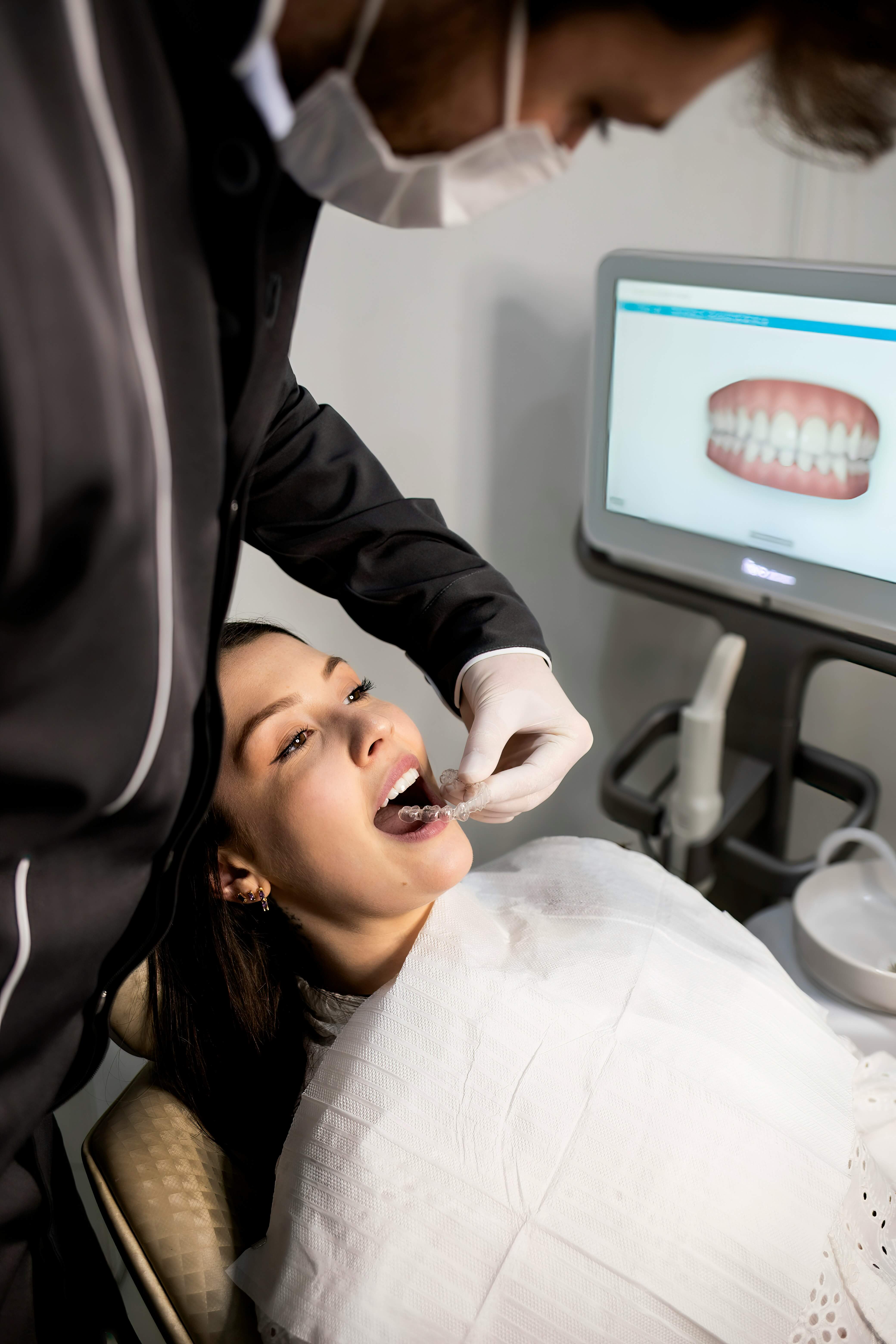
The Rise Dental approach
Planned for esthetics,
function, and longevity.
We do not look at your teeth in isolation. Before recommending Invisalign, we evaluate how your smile fits into the bigger picture: your gums, tooth structure, bite, esthetics, habits, and long-term oral health.
Signs Invisalign may help
You may be a good fit
if you notice these changes.
Your lower front teeth feel crowded
Food gets trapped between certain teeth
You notice spacing or small gaps
Your bite feels uneven
You grind or clench and see signs of wear
You had braces before but stopped wearing retainers
You want a better smile without traditional braces
You are considering bonding or veneers and want a healthier foundation first
Why it matters
We plan through the full
health of your smile.
The goal is not just to make the front teeth look straighter. The goal is to create a smile that is easier to clean, more comfortable to use, and better supported for the long run.
Gum health
Crowded teeth can be harder to clean, which may affect inflammation, bleeding, and gum stability over time.
Tooth structure
Better alignment may help reduce uneven pressure on teeth, restorations, and worn edges.
Bite and function
We look at how your teeth come together, not just how they appear in photos.
Esthetics
We plan for a smile that feels natural, balanced, and true to your face.
Long-term stability
Retention, habits, wear patterns, and bite forces matter just as much as getting the teeth straight.
Before cosmetic dentistry
Sometimes alignment is
the first step, not the last.
If you are considering bonding, veneers, whitening, or a full smile refresh, Invisalign may help us create a more conservative foundation before adding restorative material.
Invisalign alone
Best when alignment is the main concern and tooth shape, color, and proportions are already close to what you want.
Invisalign + bonding
Useful when alignment creates the right position first, then small additive changes refine worn edges, proportions, or symmetry.
Invisalign + veneers
Considered when alignment improves position, but larger changes in shape, color, or existing dentistry are still needed afterward.
What to expect
Your Invisalign journey
at Rise Dental.
01
Smile and bite evaluation
We start with photos, digital scans, and an evaluation of your teeth, gums, bite, wear patterns, and goals.
02
Personalized treatment plan
You will see what Invisalign can improve and how it fits into your overall care plan. If another treatment should come first, we will tell you clearly.
03
Clear aligners made for daily life
Invisalign uses a series of clear, removable aligners that gradually move your teeth while fitting more easily into normal routines.
04
Progress visits and refinements
We monitor movement, comfort, gum health, and bite changes along the way so the final result is not just straighter, but more stable.
05
Retainers and long-term protection
Your final retainer plan helps protect the time, energy, and investment you made in your smile.
Invisalign FAQ
Questions we hear often.
How much is an Invisalign consultation?
Invisalign consultations can be included as part of your New Patient Visit when requested. Standalone consultations are $149 and may be applied toward treatment if you move forward.
Is Invisalign safe?
For appropriate cases, yes. We evaluate your gums, bone support, bite, restorations, wear patterns, and goals before recommending Invisalign. If aligners are not the right fit, we will explain why.
Who should consider Invisalign?
Invisalign may be helpful for adults or teens with crowding, spacing, relapse after braces, uneven bite forces, food trapping, or cosmetic goals that would benefit from better alignment first.
Is Invisalign only cosmetic?
No. Many people choose Invisalign because they want a straighter smile, but alignment can also support hygiene, bite balance, comfort, restorative planning, and long-term tooth protection.
Should I do Invisalign before veneers or bonding?
Often, yes. Aligning the teeth first can create a healthier and more conservative foundation for cosmetic work, sometimes allowing us to preserve more natural tooth structure.
Do I need retainers afterward?
Yes. Retainers are essential after Invisalign because teeth naturally want to shift. Retention protects your result and supports long-term stability.
Related services
Explore connected care options.
Minimal-Prep Veneers
A conservative ceramic option when alignment alone cannot create the desired shape or color.
Cosmetic Bonding & Veneers
Additive composite treatment for worn edges, small gaps, and proportion changes.
Cosmetic Dentistry
Explore smile design, whitening, bonding, alignment, and veneer options.
Start with clarity
You do not have to know
if Invisalign is right yet.
That is what the consultation is for. We will look at your teeth, your bite, your goals, and your long-term oral health, then give you clear guidance on the next step.